7 Pet-Safe Essential Oils for a Calm Home (Without the Guilt)

The Hidden Danger in Your Diffuser: Are You Accidentally Harming Your Pet?
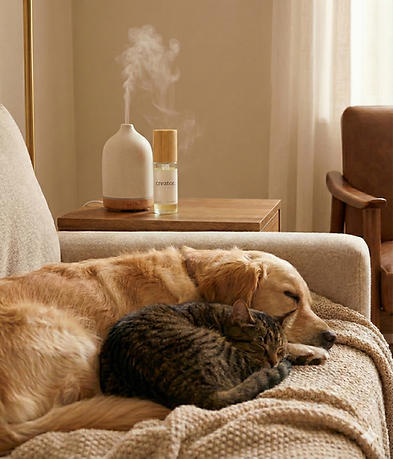
Picture this: You’ve just finished cleaning the house. You fill your beautiful ceramic diffuser with water, add a generous splash of eucalyptus and sweet orange, and hit the power button. A fine, spa-like mist fills the living room. You take a deep breath, finally relaxing into the weekend.
But across the room, your dog starts pacing and panting, or your cat suddenly bolts for the bedroom.
You thought you were creating a healthy, chemical-free sanctuary. But the terrifying truth of aromatherapy is that some of the most popular, healing essential oils for humans—like tea tree, peppermint, and eucalyptus—are highly toxic to our four-legged best friends. Their bodies, particularly feline livers, simply lack the enzymes required to break down certain concentrated volatile organic compounds (VOCs).
If you’ve ever felt a sudden, heavy wave of panic wondering, "Wait, is this safe for the dog?" or hastily unplugged a diffuser because your cat was squinting, you are not alone. That guilt isn't paranoia; it's the mark of a fiercely protective pet parent.
The Good News: You Don’t Have to Choose Between a Fresh Home and a Safe Pet
Take a deep breath. You don’t have to throw away your diffuser or surrender your home to the smell of wet dog and litter boxes. And you certainly don't need to go back to burning toxic, synthetic-fragrance candles.
You just need to adjust your recipe.
By understanding how your pet's highly sensitive olfactory system works, you can curate a collection of pure botanicals that actively soothe their nervous system while making your living space smell incredible. Let's explore the 7 vet-approved, completely pet-safe essential oils that will help you reclaim your calm, beautifully scented home—100% guilt-free.
7 Vet-Approved, Pet-Safe Essential Oils for a Calmer Home
When selecting oils to use around your furry family members, the key is choosing pure botanicals that are gentle on their highly sensitive olfactory systems.
Here are seven expertly vetted, pet-friendly essential oils that bring the spa aesthetic into your living room without the guilt.
1. Lavender (Lavandula angustifolia) – The Ultimate Nervous System Soother
There is a reason Lavender is the gold standard in holistic veterinary medicine. Rich in a naturally occurring chemical compound called linalool, true Lavender acts as a gentle sedative for both you and your pets.
How it works: It directly interacts with the central nervous system to lower heart rates and reduce cortisol (the stress hormone).
When to use it: Diffuse a few drops on low intermittent settings when your dog is pacing, pacing before a vet visit, or when you just want a peaceful, deeply relaxing Sunday afternoon. (Note: Always ensure you are buying pure Lavandula angustifolia, as cheaper "lavandin" varieties can be too harsh).
2. Frankincense (Boswellia carterii) – Grounding for Anxious Pups
Known as the "King of Oils," Frankincense has been used for millennia to deepen meditation and ground the mind. For pets, it offers a profoundly stabilizing effect during times of emotional distress.
How it works: Its earthy, resinous profile helps regulate breathing and calms erratic behavior without acting as a heavy sedative.
When to use it: This is the perfect oil to diffuse if you are dealing with a rescue pet experiencing separation anxiety or struggling to adjust to a new environment.
3. Copaiba (Copaifera officinalis) – Gentle Respiratory Support
If you love the lung-opening, clarifying scent of Eucalyptus but know it’s toxic to your cats and dogs, Copaiba is your new best friend.
How it works: Tapped directly from the resin of South American trees, Copaiba contains high levels of beta-caryophyllene. It has an incredibly mild, slightly sweet woody scent that won't overwhelm your pet’s nose, but still effectively clears the air.
When to use it: Diffuse Copaiba when you want a clean, fresh-smelling home and gentle respiratory support without the harsh, stinging volatile organic compounds (VOCs) found in mints or camphors.
4. Chamomile (Roman or German) – Sweet Relief for Hyperactive Pets
If your home feels chaotic with kids running around and dogs barking at the mailman, Chamomile is the circuit breaker you need.
How it works: Both Roman and German Chamomile possess strong antispasmodic properties, meaning they help release physical tension in the body. The scent is warm, sweet, and slightly apple-like.
When to use it: Perfect for the late afternoon "witching hour." A light diffusion can help transition a hyperactive puppy into a state of rest, signaling to the whole house that it’s time to wind down.
5. Cedarwood (Juniperus virginiana) – A Safe, Woodsy Odor Eliminator
Let’s be honest: sometimes you just need to get rid of the "wet dog" smell. Many commercial air fresheners use heavy, toxic synthetic fragrances that mask the odor while polluting your indoor air quality.
How it works: Cedarwood naturally neutralizes airborne odors while providing a grounding, forest-bathing aesthetic. As a bonus, its natural properties are historically known to be a gentle deterrent for common outdoor pests.
When to use it: Diffuse Cedarwood in your entryway or mudroom to create a welcoming, woodsy scent that greets guests without overwhelming your pet's delicate senses.
6. Sweet Marjoram (Origanum majorana) – Comforting During Thunderstorms
Historically known as the "herb of happiness," Sweet Marjoram is a powerhouse when it comes to acute panic.
How it works: It acts as a natural nerve tonic. While Lavender is great for daily, generalized relaxation, Marjoram is the heavy lifter for sudden spikes in fear.
When to use it: Keep this oil on hand for the Fourth of July, intense thunderstorms, or construction noise. It provides a comforting, herbaceous blanket of security for trembling pets.
7. Helichrysum (Helichrysum italicum) – The Restorative Background Scent
If you are chasing that luxurious, $500-a-night resort aesthetic, Helichrysum offers a complex, honey-floral scent profile that smells incredibly expensive and sophisticated.
How it works: In holistic practices, Helichrysum is often referred to as the "oil for a bleeding heart," used to treat deep emotional trauma. It is incredibly gentle, making it safe for a household with multiple pets.
When to use it: Use this when you want to treat yourself to a high-end aromatherapy experience that uplifts the emotional tone of the entire house, ensuring your pets feel just as pampered as you do.
🎁 Free Download: The Pet-Safe Aromatherapy Cheat Sheet
Worried you won't remember which oils are safe and which are toxic? We've made it foolproof.
Download our free "Print & Pin" Pet-Safe Aromatherapy Cheat Sheet. Keep it on your fridge or next to your diffuser for instant peace of mind.
Inside you'll get:
The quick-reference "Safe vs. Toxic" list.
The "Golden Ratio" pet dilution guide.
3 exclusive DIY recipes (including the Thunderstorm Calming Spray!).
The Golden Rules of Diffusing Around Pets (Never Skip These)
Even with the safest, vet-approved essential oils, how you use them matters just as much as what you use. Because a dog’s nose is up to 100,000 times more sensitive than ours (and cats have incredibly delicate livers), dilution and ventilation are your best friends.
To keep your home smelling beautiful and your pets perfectly safe, follow these three non-negotiable rules.
Rule #1: Always Leave the Door Open (The "Escape Route" Method)
Never lock a pet in a room with an active diffuser. Animals are excellent at self-regulating; if a scent becomes overwhelming or irritates their olfactory system, they will naturally leave the area. Always ensure they have a clear, open escape route to a scent-free zone in the house.
Rule #2: Keep Sessions Short (15-Minute Intervals)
You do not need to run your diffuser for eight hours straight to get the therapeutic benefits. In fact, doing so can lead to "olfactory fatigue" for you and toxic buildup for your pets. Run your ultrasonic diffuser in short, 15-to-30-minute intervals, and then turn it off for a few hours.
Rule #3: Watch for the Warning Signs of Scent Overload
Empower yourself by knowing exactly what to look for. If your pet is having a negative reaction to an essential oil in the air, they will tell you. Immediately turn off the diffuser and open the windows if you notice:
Squinting or watery eyes
Excessive drooling or lip smacking
Pacing, whining, or sudden restlessness
Lethargy, weakness, or uncoordinated walking
Labored breathing or coughing
Hydrosols: The Foolproof, Ultra-Safe Alternative to Essential Oils
If you have a highly sensitive pet, a senior cat, or you simply still feel a lingering sense of anxiety about using concentrated oils, there is a foolproof alternative: Hydrosols.
Also known as floral waters, hydrosols are the aromatic water left behind after the steam distillation process of extracting essential oils. They contain the exact same therapeutic plant properties and beautiful scents, but at a microscopic, water-based concentration. You can safely spritz a lavender or chamomile hydrosol on your pet's bedding, use it as a gentle room spray, or even wipe down their fur to calm them during a storm. It delivers the ultimate peace of mind.
Which Oils Are Highly Toxic to Pets? (The "Never Diffuse" List)
To truly take control of your family’s health, you need to know what to avoid. While incredible for human use, the following oils contain high levels of phenols, ketones, or other compounds that dogs and cats cannot safely metabolize.
Keep these far away from your pets (do not diffuse or apply topically):
Tea Tree (Melaleuca): Highly toxic to both dogs and cats; can cause severe neurological issues.
Eucalyptus: Can cause severe respiratory distress and excessive salivation.
Peppermint & Wintergreen: Way too intense for their nasal passages and potentially toxic to the liver.
Citrus Oils (Lemon, Grapefruit, Orange): Particularly dangerous for cats, as they lack the glucuronyl transferase enzyme needed to process the d-limonene compound.
Pine & Spruce: Can cause liver damage and skin irritation.
Ylang Ylang & Cinnamon: Can cause vomiting, low blood pressure, and breathing difficulties.
Disclaimer: This article is for educational purposes and does not replace professional veterinary advice. Always consult with a holistic vet before introducing new routines to pets with pre-existing medical conditions, and immediately contact the ASPCA Animal Poison Control Center if you suspect accidental ingestion.


Comments